Written by: BioRevive Editorial Team  

‍

Medically reviewed by: Dr. Aishwarya Selvaraj, MBBS, Clinical Dermatology (Ireland), Aesthetic Practitioner  

‍

Last Medically Reviewed: September 2026  

‍

About the Medical Reviewer: Dr. Aishwarya Selvaraj is the founder and managing director of BioRevive by Skin Envy, with more than 12 years of experience and a focus on aesthetic medicine and evidence-based skin and wellness care.  

‍

Medical Disclaimer: Hair loss treatments are not substitutes for medical diagnosis or treatment. If you experience persistent or sudden hair loss, unexplained scalp changes, or symptoms of an underlying medical condition, consult an appropriately qualified medical professional before beginning any hair-loss treatment.

‍

Introduction

‍

Early hair loss does not automatically require a hair transplant. The first step is identifying the cause and determining whether existing follicles can be preserved with appropriate medical or non-surgical treatment.

‍

Hair loss can have several causes, including androgenetic alopecia, nutritional deficiencies, hormonal changes, stress-related shedding, thyroid disorders, scalp conditions, and certain medications. Therefore, treatment should be based on diagnosis rather than simply choosing a procedure because it is popular.

‍

For people searching for Hair Loss Treatment in Chennai, it is important to understand that different types of hair loss require different approaches. Treatments such as PRP, GFC, LLLT, and QR678 may be considered for selected patients, but their mechanisms, evidence levels, and treatment protocols differ. A professional assessment can help determine the underlying cause and the most appropriate treatment plan.

‍

What Causes Early Hair Loss in Men and Women?

‍

Hair loss is not a single condition. The pattern, speed, and location of hair loss can provide clues about the underlying cause.

‍

Androgenetic Alopecia

‍

Androgenetic alopecia, commonly known as male or female pattern hair loss, is one of the most common causes of progressive thinning. In men, it often appears as a receding hairline, thinning at the crown or gradual loss of density on the top of the scalp. In women, thinning is more commonly seen over the top and central scalp, while the frontal hairline is often preserved. (American Academy of Dermatology)

‍

Early diagnosis matters because treatment may be more useful while follicles are still producing smaller, miniaturized hairs. The American Academy of Dermatology notes that early treatment can help preserve follicles before they become increasingly difficult to restore. (American Academy of Dermatology)

‍

Telogen Effluvium

‍

Some people experience sudden or increased shedding several weeks or months after physical or emotional stress. Illness, significant weight loss, nutritional deficiencies, major surgery, and other physiological changes can trigger temporary shedding.

‍

In these situations, treating the underlying cause may be more important than immediately considering a hair restoration procedure.

‍

Hormonal and Medical Factors

‍
Hair loss in women can sometimes be associated with hormonal changes, including conditions involving the thyroid or polycystic ovary syndrome. Certain medications and nutritional deficiencies can also contribute to shedding.

‍

For this reason, persistent or rapidly progressing hair loss should be assessed by a qualified dermatologist or hair specialist.

‍

Why Early Diagnosis Should Come Before a Hair Transplant

‍

A hair transplant involves moving healthy hair follicles from one area of the scalp to another. It can provide a long-term solution for appropriately selected patients, but candidacy depends on factors such as the pattern of hair loss, available donor hair and the condition of the recipient area. (American Academy of Dermatology)

‍

When someone is experiencing early-stage thinning, there may still be a substantial amount of existing hair that can potentially be preserved. In such cases, a medical or non-surgical approach may be discussed before surgery.

‍

This does not mean that hair transplantation should never be considered at an early stage. Rather, the decision should be based on diagnosis, progression, donor availability, expected results, and long-term planning.

‍

A personalized Hair Loss Treatment in Chennai plan can begin with an examination of the scalp, hair density, shedding pattern, and medical history. Depending on the situation, a doctor may also recommend blood tests or additional investigations.

‍

What Should a Hair Loss Assessment Include?

‍

Before choosing a treatment, a professional assessment may look at:

‍

  • The pattern and duration of hair loss
  • Family history of hair thinning
  • Hair shedding versus gradual thinning
  • Scalp health
  • Hair shaft thickness
  • Density of existing hair
  • Presence of miniaturized follicles
  • Recent illness or significant stress
  • Diet and nutritional status
  • Hormonal or medical conditions
  • Current medications
  • Previous hair treatments
  • The availability of healthy donor hair

‍

Trichoscopy or dermoscopy may also help a specialist evaluate the scalp and individual hair follicles.

‍

This step is particularly important because different causes of hair loss require different approaches. The American Academy of Dermatology also recommends professional evaluation because treatment depends on the specific type of hair loss. (American Academy of Dermatology)

‍

When Should You Seek Medical Attention for Hair Loss?

‍

Not every episode of hair shedding requires urgent medical attention, but a dermatologist or qualified hair specialist should evaluate certain changes. Early assessment can help identify whether the hair loss is related to pattern hair loss, temporary shedding, a scalp condition, or another underlying cause.
‍
Seek professional evaluation if you notice:
‍
- Sudden or rapidly increasing hair loss

‍

- Clearly defined bald patches on the scalp or beard

‍

- Significant widening of the hair part or rapid reduction in hair density

‍

- A rapidly receding hairline or noticeable crown thinning

‍

- Hair loss accompanied by itching, redness, scaling, pain, or inflammation

‍

- Scalp changes such as sores, crusting, or persistent irritation

‍

- Loss of eyebrows or eyelashes along with scalp hair loss

‍

- Hair shedding that continues for several months without an obvious reason

‍

- Hair loss following a new medication, illness, major weight change, or significant physical stress

‍

- Hair loss accompanied by symptoms such as unexplained fatigue, menstrual changes, or other hormonal concerns
‍
These signs do not necessarily indicate a serious medical condition, but they can help distinguish common pattern hair loss from conditions that may require specific investigation or treatment. A dermatologist can assess the scalp and hair follicles and recommend appropriate investigations when necessary.

‍

Treatment Options for Early Hair Loss Before Hair Transplant 

‍

Once the cause and stage of hair loss have been evaluated, an appropriate treatment plan can be considered. Depending on the diagnosis, established medical treatments may be appropriate, while procedures such as PRP, GFC, LLLT and QR678 may be considered selectively. These options should not be viewed as having identical levels of evidence or suitability. 

‍

1. PRP Hair Treatment

‍

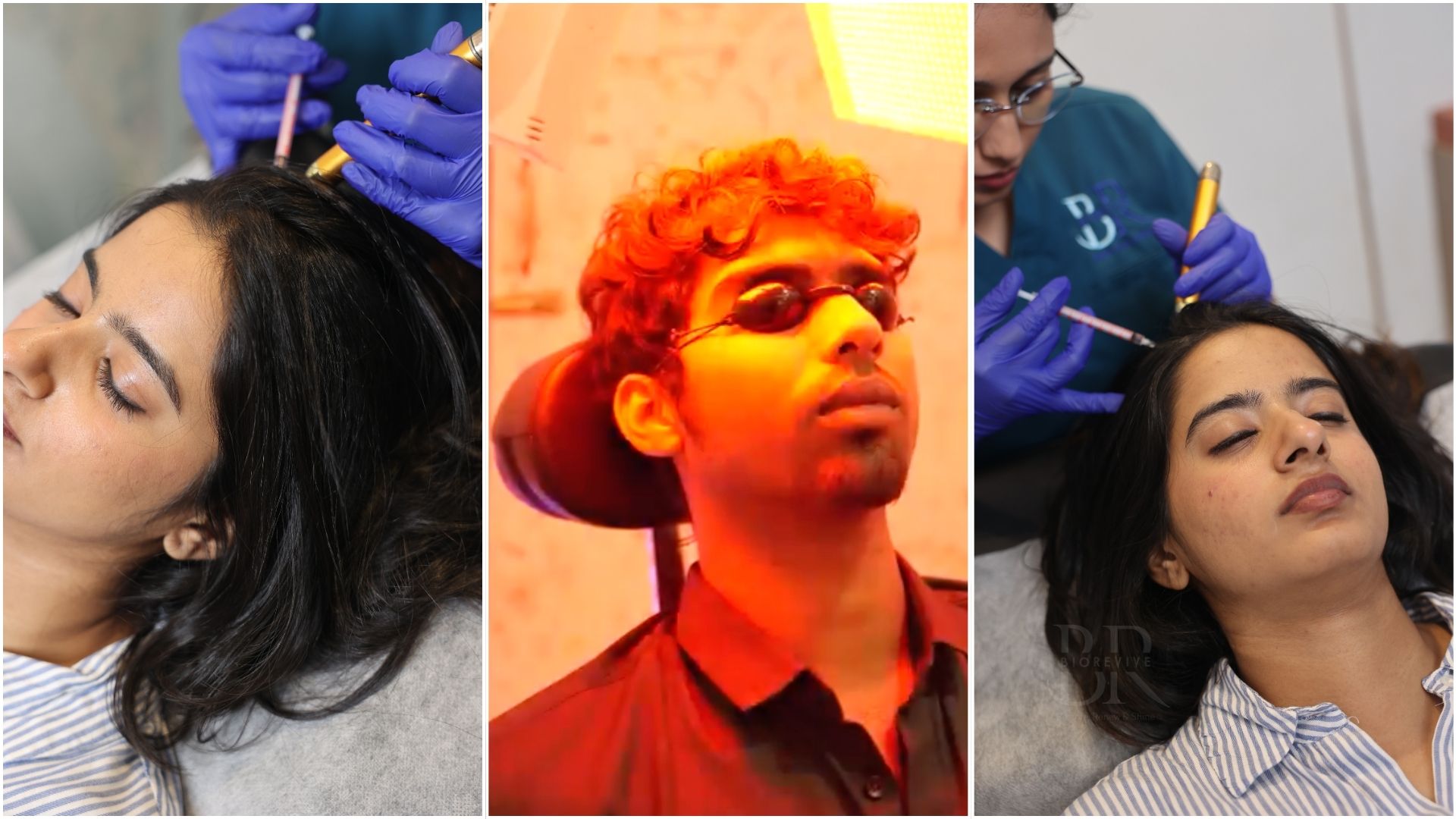
Platelet-rich plasma, commonly called PRP, is a procedure that uses a patient's own blood. A small amount of blood is collected and processed to concentrate the platelet-rich portion, which is then injected into areas of the scalp affected by thinning.

‍

PRP has been studied for androgenetic alopecia and may help reduce shedding and support improvements in hair density in some patients. The American Academy of Dermatology describes PRP as a procedure that can be used for hair loss and notes that maintenance treatments may be needed to maintain results. (American Academy of Dermatology)

‍

PRP may be considered when:

‍

  • Hair follicles are still present but producing thinner hair
  • Early or moderate pattern hair loss is present
  • The patient wants a non-surgical treatment
  • A doctor considers injectable regenerative therapy appropriate
  • The goal is to support existing hair rather than create new follicles

‍

PRP is not a permanent replacement for a hair transplant. Results vary between individuals, and treatment usually involves multiple sessions followed by maintenance according to the treatment plan.

‍

2. GFC Hair Treatment

‍

GFC, or Growth Factor Concentrate, is another injectable approach designed to deliver concentrated growth factors to the scalp. It is increasingly used in regenerative hair treatment protocols for people with thinning hair.

‍

Research into growth-factor injections is developing. A recent systematic review and meta-analysis found that growth-factor injections, including GFC-related approaches, showed improvements in hair density and thickness across the studies reviewed but also highlighted substantial differences between protocols and limitations in study quality. (PubMed)

‍

Individual studies have also reported improvements following concentrated growth factor treatment, although some available research involves small or single-arm studies. (PubMed)

‍

Therefore, GFC should not be presented as a guaranteed solution for every type of hair loss.

‍

It may be considered as part of a personalized Hair Loss Treatment in Chennai program when the specialist believes that the existing follicles may benefit from regenerative support.

‍

3. LLLT for Hair Growth

‍

Low-Level Light Therapy, commonly abbreviated as LLLT, uses specific low-intensity light wavelengths to target the scalp. It is a non-invasive approach that has been investigated for androgenetic alopecia and other forms of hair loss.

‍

A 2024 systematic review and meta-analysis evaluated 38 studies involving 3,098 patients across different types of alopecia. Most participants had androgenetic alopecia, and the researchers assessed changes in hair density following LLLT. (PubMed)

‍

LLLT may be considered when:

‍

  • Hair thinning is at an early or moderate stage
  • The follicles are still active
  • A noninvasive treatment is preferred
  • The treatment protocol is appropriate for the diagnosed condition

‍

One important point is consistency. Light-based hair treatments generally require repeated sessions over time, and outcomes can differ depending on the device, wavelength, treatment schedule, and individual response.

‍

LLLT may therefore be used independently or as part of a broader hair-management plan rather than being viewed as an instant hair regrowth procedure.

‍

4. QR678 Hair Treatment

‍

QR678 is a hair-growth-factor formulation administered through intradermal scalp injections. Research has investigated QR678 and QR678 Neo in both male androgenetic alopecia and female pattern hair loss.

‍

A multicenter open-label study involving 2,428 patients reported improvements in hair density and hair-related assessment measures after treatment with QR678 Neo. However, because the study was open-label and did not have the same design strength as a large randomized controlled trial, its findings should be interpreted within those limitations. (PubMed)

‍

Another comparative study evaluated QR678 against PRP in men with androgenetic alopecia and reported improvements in several hair parameters after treatment. (PubMed)

‍

QR678 may therefore be discussed as an option for selected patients with early or moderate hair thinning. The suitability depends on the diagnosis, follicular condition, treatment goals, and clinical assessment.

‍

How Do PRP, GFC, LLLT, and QR678 Compare? 

‍

Treatment Evidence Strength Best Suited For Typical Limitations
PRP Moderate and growing evidence for androgenetic alopecia Selected patients with early to moderate hair thinning and active follicles Results vary; protocols differ and maintenance sessions may be required
GFC Emerging evidence; research is still developing Selected patients seeking an injectable regenerative approach Studies use different preparations and protocols; long-term evidence remains limited
LLLT Growing clinical evidence, particularly for androgenetic alopecia Early to moderate thinning where a non-invasive option is preferred Requires consistent sessions; results depend on device, wavelength and treatment schedule
QR678 Promising but more limited evidence compared with established hair-loss approaches Selected patients with early or moderate thinning Some studies have design limitations, and treatment response can vary

‍

If you're unsure whether your hair loss is suitable for PRP, GFC, LLLT, or another approach, a scalp assessment can help determine the underlying cause, assess follicular health, and identify the most appropriate treatment plan.

‍

Can These Treatments Prevent the Need for a Hair Transplant?

‍

This is one of the most common questions people ask after noticing early thinning.

‍

The answer depends on the cause and progression of hair loss.

‍

Treatments such as PRP, GFC, LLLT, and QR678 are designed to support existing hair or improve the appearance and density of thinning areas. They cannot reliably restore hair in areas where follicles have been permanently destroyed.

‍

A person with early follicular miniaturization may therefore have more opportunity to benefit from treatment than someone with long-standing areas of complete baldness.

‍

This is why starting an appropriate treatment plan early can be important. The objective is not necessarily to avoid a transplant forever. Instead, treatment can focus on preserving existing hair and understanding how the condition progresses before making a surgical decision.

‍

Hair Loss Treatment for Men vs Women

Although men and women can experience similar forms of hair loss, the pattern and underlying causes can differ.

Early Hair Loss in Men

Men may notice:

‍

  • Receding temples
  • A changing hairline
  • Crown thinning
  • Reduced density on the top of the scalp
  • Increasingly fine individual hairs

‍

Male pattern hair loss can begin relatively early, including during the late teenage years or twenties. (American Academy of Dermatology)
‍
Treatment may involve medical therapy, PRP, LLLT, GFC, QR678, or a combination of approaches depending on the diagnosis. The appropriate hair loss treatment should be selected after assessing the pattern and underlying cause.

‍

Early Hair Loss in Women

‍

Women commonly notice:

‍

  • A widening center part
  • Reduced density across the top of the scalp
  • Increased scalp visibility
  • A thinner ponytail
  • Increased shedding during washing or brushing

‍

Female pattern hair loss can have hormonal and medical associations that need to be considered during assessment. A dermatologist may recommend appropriate investigations before selecting treatment. (American Academy of Dermatology)

‍

For women who are pregnant, planning pregnancy, or breastfeeding, treatment choices require particular medical consideration because some hair-loss medicines are not appropriate during pregnancy. (American Academy of Dermatology)
‍

When Should You Consider a Hair Transplant?

‍

A hair transplant may become an option when hair loss has progressed to a stage where non-surgical treatments are unlikely to provide sufficient coverage and the patient has suitable donor hair.

‍

According to the American Academy of Dermatology, candidates generally need enough healthy hair available for transplantation and the ability to grow hair in the thinning area. (American Academy of Dermatology)

‍

A transplant may therefore be discussed when:

‍

  • Hair loss has stabilized or is appropriately managed
  • There is sufficient donor hair
  • The recipient area is suitable
  • The expected outcome has been discussed realistically
  • The patient understands the long-term nature of hair loss

‍

Importantly, a hair transplant does not necessarily stop the progression of native, non-transplanted hair. Ongoing medical management may still be recommended depending on the diagnosis.

‍

How to Build a Personalized Hair Loss Treatment Plan

‍
A personalized approach to Hair Loss Treatment in Chennai should focus on selecting treatments according to the underlying cause, follicular condition, and progression of hair loss.
‍
A typical assessment may involve:
‍
Step 1: Identify the cause.
‍
Determine whether the hair loss is related to pattern hair loss, temporary shedding, a scalp condition, hormonal factors or another cause.
‍
Step 2: Assess follicular health
‍
Examine hair density, hair shaft thickness, and signs of follicular miniaturization.
‍
Step 3: Select an appropriate approach.
‍
Depending on the diagnosis, options may include evidence-based medical treatment, PRP, GFC, LLLT, or QR678.
‍
Step 4: Monitor progress.
‍
Clinical photographs and trichoscopy can help track changes in density and follicular appearance over time.
‍
Step 5: Reassess when necessary
‍
If hair loss continues despite appropriate management, the possibility of hair transplantation can be discussed based on donor hair availability and long-term goals.

‍

Related Treatments:

‍

PRP Hair Treatment 
GFC Hair Treatment 
LLLT Hair Treatment 
QR678 Hair Treatment 

‍

Frequently Asked Questions

‍

Can early hair loss be treated without a transplant?

‍

Yes. Depending on the cause and stage, non-surgical options may include medication, PRP, GFC, LLLT and other treatments. The appropriate option depends on the diagnosis.

‍

Is PRP better than GFC for hair loss?

‍

PRP and GFC use different preparation methods and protocols. Current evidence does not support treating one as universally superior for every patient. A specialist should determine which approach is appropriate for the individual's condition.

‍

Can LLLT help with early hair thinning?

‍

Research suggests that LLLT may support hair density in some people with androgenetic alopecia. However, results depend on the device, treatment protocol, and individual response. (PubMed)

‍

Is QR678 suitable for both men and women?

‍

Studies have investigated QR678-based treatments in both male androgenetic alopecia and female pattern hair loss. Suitability still depends on the individual diagnosis and clinical assessment. (PubMed)

‍

Does hair loss always require a hair transplant?

‍

No. A transplant is one treatment option, not automatically the first step. People with early thinning may first be assessed for medical and non-surgical approaches.

‍

When should I see a hair specialist?

‍

Consider a professional assessment if hair loss is persistent, progressive or sudden, or if it is accompanied by bald patches or scalp symptoms. Early evaluation can help identify the underlying cause and determine whether medical or non-surgical treatment may be appropriate.

‍

Conclusion

‍

Early hair loss does not automatically mean that a hair transplant is necessary. Identifying the cause and assessing the condition of the hair follicles can help determine which treatment options may be appropriate before considering surgery.

‍

Depending on the diagnosis, PRP, GFC, LLLT and QR678 may be considered for selected patients with early or moderate thinning. However, these treatments have different mechanisms and evidence bases, and none should be presented as a guaranteed solution for every type of hair loss.

‍

If you are experiencing persistent, progressive, or unexplained hair loss, a professional scalp and hair assessment can help identify the underlying cause and determine whether medical or non-surgical treatment may be appropriate. If you are considering Hair Loss Treatment in Chennai, book a consultation at BioRevive for a personalized scalp assessment and discuss suitable treatment options based on your hair-loss pattern, follicular health, and individual goals.

‍

References
‍
  1. American Academy of Dermatology — Male Pattern Hair Loss and Treatment. (American Academy of Dermatology)
  2. American Academy of Dermatology — Hair Loss: Diagnosis and Treatment. (American Academy of Dermatology)
  3. American Academy of Dermatology — Hair Transplant: Candidacy and Treatment. (American Academy of Dermatology)
  4. Low-Level Laser and LED Therapy in Alopecia: A Systematic Review and Meta-Analysis. (PubMed)
  5. The Efficacy of Growth Factor Injection in Androgenic Alopecia: A Systematic Review and Meta-Analysis. (PubMed)
  6. Evaluation of the Safety and Effectiveness of QR678 Neo Hair Growth Factor Formulation. (PubMed)

Read More

Early Hair Loss

September 28, 2026
Read More

Best Wellness Treatments

September 21, 2026
Read More